
What Does EWG Verified Mean? And Why It Matters for Your Grooming Routine
You've probably seen the EWG Verified seal on a product and thought: what does that actually mean? Is it just another marketing badge, or does it actually tell you something useful about what's in the bottle?
The short answer: EWG Verified is one of the most rigorous independent safety certifications in personal care. And most brands — even ones that market themselves as "natural" or "clean" — can't get it.
Here's everything you need to know.
What Is EWG?
EWG stands for the Environmental Working Group — a nonprofit organization founded in 1993 that researches and advocates for human health and environmental protection. They're best known for their Skin Deep database, which rates over 70,000 personal care products and ingredients for safety.
EWG doesn't take money from the brands they review. They're independently funded, which means their ratings aren't influenced by who pays them. When they flag an ingredient as a concern, it's based on the scientific literature — not a company's marketing budget.
What Does EWG Verified Actually Mean?
EWG Verified is their premium certification — a step above simply being listed in their database. To earn EWG Verification, a product must meet four strict criteria:
1. No Ingredients of Concern
Every ingredient in the formula must be free from EWG's list of chemicals of concern. This includes:
- Parabens (preservatives linked to hormone disruption)
- Phthalates (plasticizers linked to endocrine disruption)
- Formaldehyde and formaldehyde-releasing preservatives
- Synthetic fragrance (which can hide hundreds of undisclosed chemicals)
- Aluminum compounds (linked to estrogenic activity)
- SLS and SLES (sulfates that strip the skin barrier)
- Oxybenzone and other harmful UV filters
- And dozens of other flagged compounds
This is not a simple checklist. EWG reviews each ingredient against the full body of scientific literature — including studies on toxicity, carcinogenicity, hormone disruption, and environmental impact.
2. Full Transparency
The brand must disclose every ingredient on the label — including fragrance components, which most companies are not legally required to reveal. "Fragrance" is a legal loophole that allows companies to hide proprietary blends of potentially hundreds of chemicals under a single word. EWG Verified products cannot use this loophole.
3. Good Manufacturing Practices
The product must be manufactured according to good manufacturing practices (GMP) — standards that ensure consistency, quality, and safety in production. This rules out products made in facilities with poor quality controls.
4. Accurate Labeling
What's on the label must match what's in the bottle. EWG verifies that ingredient lists are accurate and not misleading. No greenwashing, no hidden ingredients, no vague claims.
How Hard Is It to Get EWG Verified?
Harder than most people realize. Out of the tens of thousands of products in EWG's Skin Deep database, only a small fraction carry the EWG Verified seal. Many brands that market themselves as "clean," "natural," or "non-toxic" do not qualify — because when you look at their full ingredient lists, something doesn't pass.
Common reasons brands fail EWG Verification:
- Use of "fragrance" or "parfum" without disclosure
- Preservatives that release formaldehyde
- Ingredients with insufficient safety data
- Misleading or incomplete ingredient labeling
- Manufacturing in facilities that don't meet GMP standards
The process requires brands to submit complete formulas, manufacturing information, and labeling for review. It's not something you can buy or shortcut your way into.
EWG Verified vs. "Natural" vs. "Clean"
The words "natural" and "clean" on a personal care product mean nothing legally. There is no regulatory standard for either term in the United States. Any brand can put "natural" on their label regardless of what's actually in the formula.
"EWG Verified" is different. It's a defined standard, independently reviewed, with specific criteria that must be met and maintained. Here's how it stacks up:
- "Natural" — no legal definition, no third-party review, no standards
- "Clean" — no legal definition, self-defined by each brand
- "Non-toxic" — no legal definition, self-certified
- EWG Verified — independent review, specific criteria, ongoing compliance required
When a brand calls their products "clean" without EWG Verification, they're essentially asking you to trust their own word about their own products. EWG Verified means a third party has checked.
What About Yuka and Think Dirty?
EWG isn't the only organization rating personal care products for safety. Two other tools worth knowing:
Yuka
Yuka is a mobile app that lets you scan product barcodes and get an instant safety rating. It uses a scoring system based on ingredient safety data, with ratings from "Poor" to "Excellent." Yuka Excellent is their highest rating, given only to products with clean, safe formulas. HygieneLab products earn Yuka's Excellent rating across the board.
Think Dirty
Think Dirty is another ingredient safety app that rates products on a scale of 0 to 10 — where 0 means cleanest and 10 means most concerning. HygieneLab's new deodorant scores a 0 on Think Dirty, meaning it's as clean as it gets by their standards.
Carrying all three — EWG Verified, Yuka Excellent, and Think Dirty 0 — is rare. Most brands that claim to be clean don't survive scrutiny from even one of these independent tools.
Why Most Men's Grooming Brands Aren't EWG Verified
The mainstream men's grooming market has historically prioritized performance and scent over ingredient safety. Many of the most popular brands — including ones positioned as "premium" — rely on synthetic fragrances, aluminum compounds, and preservatives that wouldn't pass EWG's review.
Even some brands marketed specifically as "natural" or "clean" for men fall short. Without independent verification, there's no way to know if their "clean" claims hold up under scrutiny.
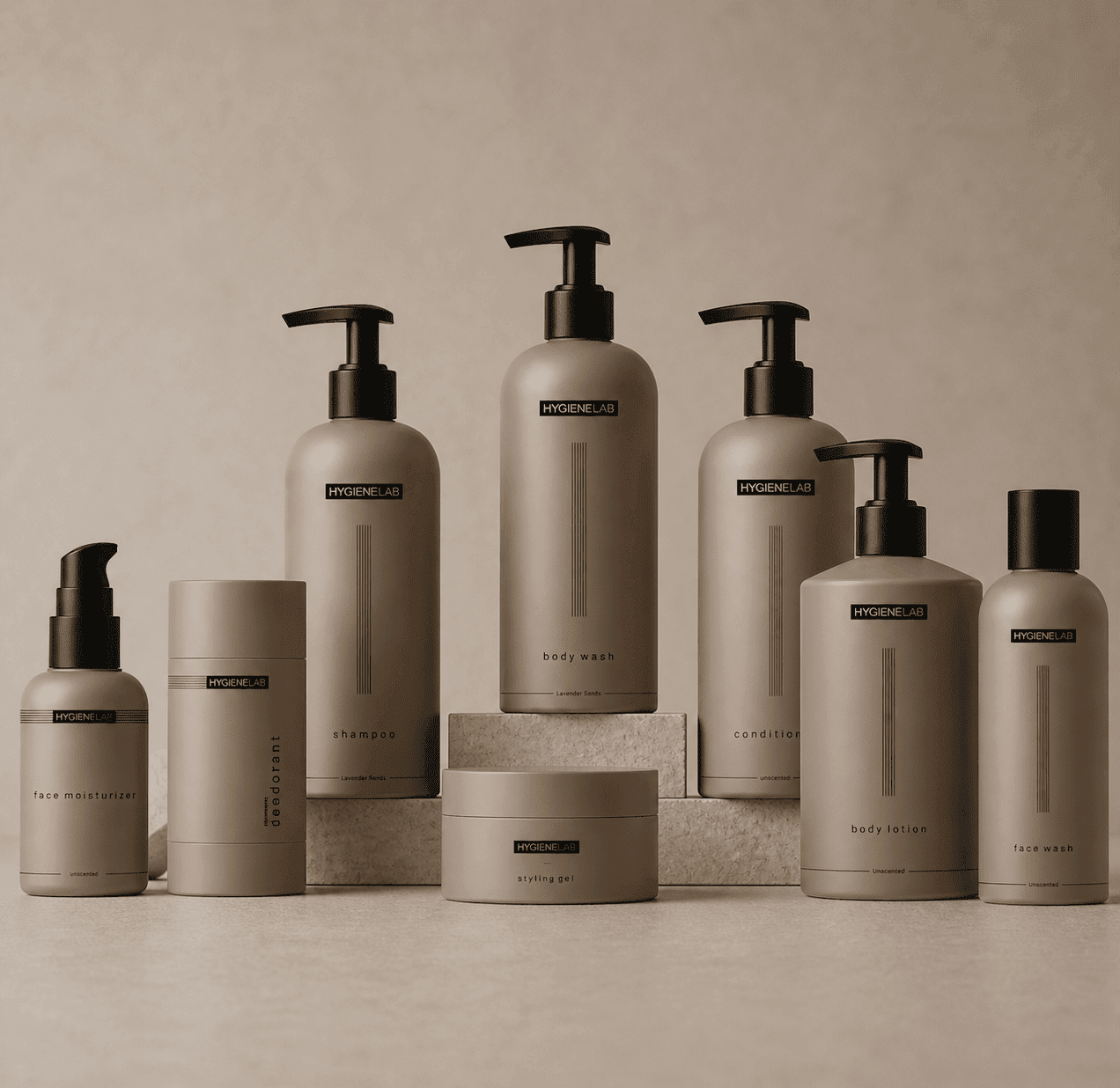
HygieneLab was built from the ground up to meet the standard that most brands avoid. Every formula we make — from our deodorant to our shampoo, conditioner, body wash, face wash, and moisturizer — carries EWG Verification. Not because it was easy, but because we believe it's the minimum bar for a brand that takes ingredient safety seriously.
What EWG Verified Means for Your Daily Routine
The average man applies 6 to 12 personal care products every day — shampoo, conditioner, body wash, deodorant, face wash, moisturizer. Each one absorbs into your skin to some degree. Over a lifetime, the cumulative exposure to whatever is in those products adds up.
EWG Verified gives you a shortcut: instead of reading and researching every ingredient on every label, you can trust that someone with expertise has already done that work. The seal means the product has been reviewed against the full scientific literature and found to be free from ingredients of concern.
It's not a guarantee that a product is perfect. But it is a meaningful, independently verified signal that the brand takes ingredient safety seriously — and has the receipts to prove it.
The Bottom Line
EWG Verified is not a marketing term. It's a rigorous, independently reviewed certification that requires full ingredient transparency, freedom from chemicals of concern, good manufacturing practices, and accurate labeling. Most brands can't get it — and many that call themselves "clean" haven't tried.
Every HygieneLab product carries EWG Verification. Combined with Yuka Excellent ratings and Think Dirty scores of 0, it's the most thoroughly vetted men's grooming line available.
If you're ready to upgrade your routine with products you can actually trust, explore the full HygieneLab lineup here. Every order ships free and comes with a 60-day money-back guarantee.
— The HygieneLab Team