
Why Your Shampoo Might Be Hurting Your Hair (And What to Use Instead)
Most men don't think much about their shampoo. You grab whatever's in the shower, lather up, rinse, and move on. It's just shampoo, right?
Here's the thing: the shampoo you use every day has a significant impact on the health of your hair and scalp — and most conventional formulas are working against you without you knowing it. Stripping your scalp's natural oils. Coating your hair with silicones that mimic health without delivering it. Exposing you to hormone-disrupting chemicals every single morning.
This is what's actually in your shampoo — and what to look for instead.
The Problem With Most Men's Shampoos
Walk into any drugstore and the men's shampoo aisle is full of products that promise strong, healthy hair. But flip them over and look at the ingredient list. You'll find a handful of ingredients that are doing more harm than good.
Sulfates: The Ingredient Stripping Your Scalp
Sodium lauryl sulfate (SLS) and sodium laureth sulfate (SLES) are the foaming agents in most conventional shampoos. They're cheap, they create a satisfying lather, and they clean effectively — sometimes too effectively.
Sulfates strip the scalp of its natural sebum, the oil your body produces to protect and moisturize your hair and skin. When you strip that oil away daily, your scalp responds by overproducing oil to compensate — leading to greasier hair that needs washing more frequently. It becomes a cycle: the more you wash, the oilier your scalp gets, the more you need to wash.
For men with dry scalp, dandruff, or sensitive skin, sulfates can cause irritation, flaking, and inflammation. They also fade color-treated hair faster and strip the protein bonds that keep hair strong.
Silicones: The Illusion of Healthy Hair
Look for ingredients ending in "-cone," "-conol," or "-xane" — dimethicone, cyclomethicone, amodimethicone. These are silicones, and they're in the majority of conventional shampoos and conditioners.
Silicones coat the hair shaft, creating a smooth, shiny appearance that mimics healthy hair. The problem: they don't actually improve hair health. They build up over time, weighing hair down, blocking moisture from penetrating the hair shaft, and suffocating the scalp. The only way to remove silicone buildup is with — you guessed it — more sulfates. The two ingredients essentially require each other, trapping you in a cycle of artificial shine and chemical dependency.
Synthetic Fragrance: The Hidden Chemical Cocktail
"Fragrance" or "parfum" appears on the ingredient list of most shampoos as a single word. But that word can represent a blend of potentially hundreds of undisclosed chemicals — including known allergens, hormone disruptors, and sensitizers.
In the United States, fragrance formulas are considered trade secrets, meaning companies are not required to disclose what's in them. When you see "fragrance" on a label, you have no idea what you're actually putting on your scalp and skin every day.
Parabens: Preservatives Linked to Hormone Disruption
Methylparaben, propylparaben, butylparaben — these preservatives keep shampoos shelf-stable for years. They're also among the most studied endocrine disruptors in personal care products. Parabens mimic estrogen in the body and have been detected in human tissue. While regulatory bodies consider them safe at current levels, the cumulative daily exposure from multiple products adds up over a lifetime.
What Your Scalp Actually Needs
A healthy scalp is the foundation of healthy hair. And a healthy scalp needs three things: gentle cleansing, proper hydration, and protection of its natural barrier.
The ingredients that deliver this look very different from what's in most men's shampoos:
Plant-Based Cleansers
Ingredients like sodium laurylglucosides hydroxypropylsulfonate and disodium cocoyl glutamate clean the scalp and hair effectively without stripping natural oils. They're derived from coconut and sugar, they're biodegradable, and they're gentle enough for daily use without triggering the oil-overproduction cycle that sulfates cause.
Hydrolyzed Protein and Amino Acids
These ingredients penetrate the hair shaft and actually strengthen it from within — not just coat the outside. Hydrolyzed proteins help repair damage, reduce breakage, and improve the hair's ability to retain moisture. This is real hair health, not the illusion of it.
Aloe Vera
Aloe vera is one of the most effective scalp-soothing ingredients available. It hydrates without leaving residue, reduces inflammation, and helps maintain the scalp's natural pH balance. It's also rich in vitamins and enzymes that support healthy hair growth.
Panthenol (Vitamin B5)
Panthenol is a humectant — it draws moisture into the hair shaft and locks it in. It also adds volume without heaviness and improves the hair's elasticity, reducing breakage. Unlike silicones, it actually delivers moisture rather than simulating it.
What to Look for in a Non-Toxic Men's Shampoo
Reading a shampoo label shouldn't require a chemistry degree. Here's a simple checklist:
- Sulfate-free — avoid SLS (sodium lauryl sulfate) and SLES (sodium laureth sulfate)
- Silicone-free — avoid ingredients ending in -cone, -conol, or -xane
- No synthetic fragrance — look for "essential oils" or specific botanical extracts instead of "fragrance" or "parfum"
- Paraben-free — avoid methylparaben, propylparaben, butylparaben
- Third-party verified — EWG Verified, Yuka Excellent, or Think Dirty rated means an independent organization has reviewed the full formula
- Positive ingredients — look for aloe vera, plant-based proteins, panthenol, and botanical extracts that actually nourish
How HygieneLab's Shampoo Is Different
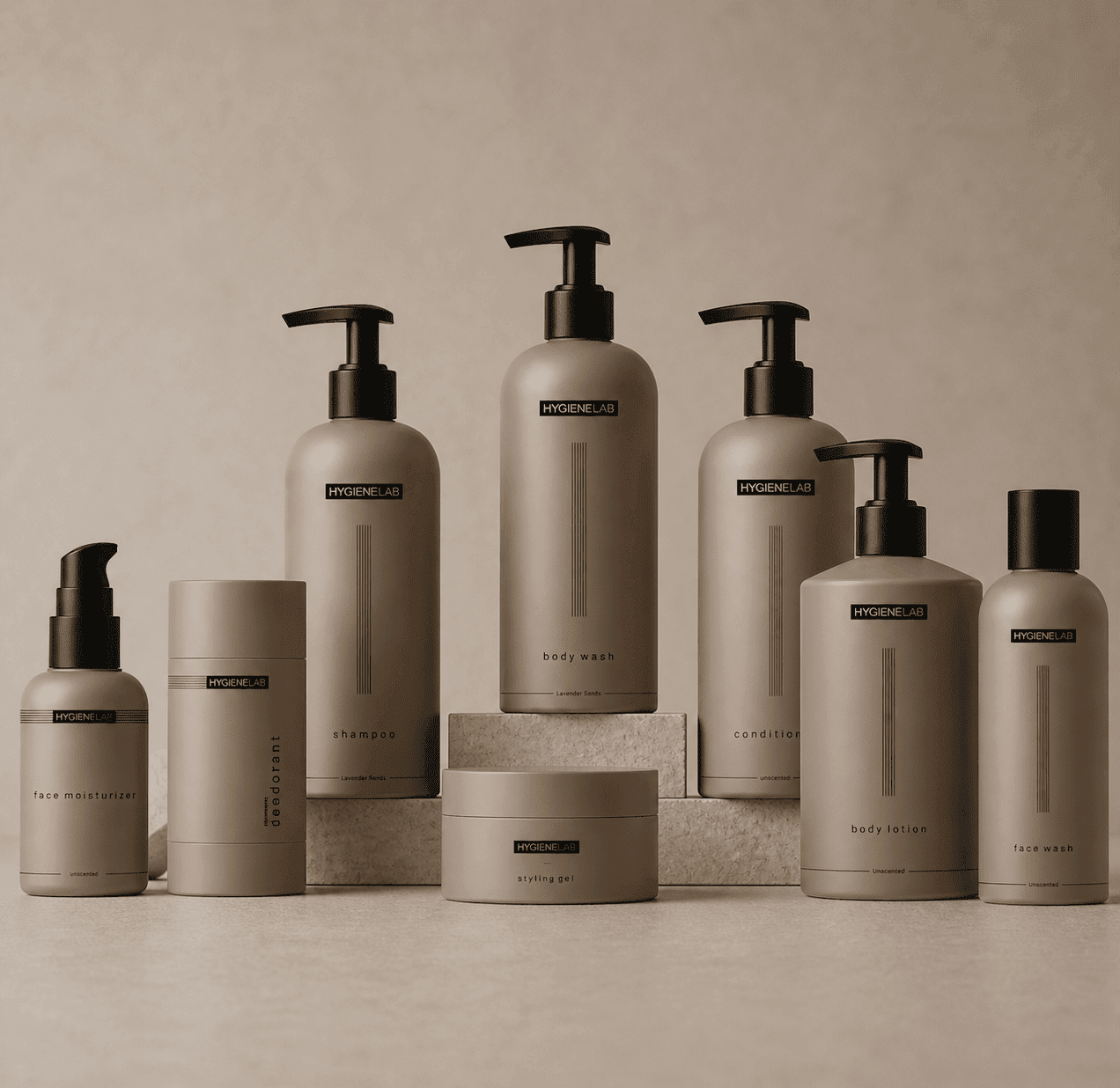
HygieneLab's shampoo was formulated around one principle: every ingredient has to earn its place. No fillers, no silicones, no synthetic fragrance, no sulfates, no parabens.
Instead, the formula is built on plant-based cleansers that clean without stripping, hydrolyzed protein and amino acids that strengthen hair from within, and aloe vera that soothes and hydrates the scalp. It's scented with lavender, patchouli, and frankincense essential oils — never synthetic fragrance.
Every HygieneLab shampoo is EWG Verified, rated Excellent on Yuka, and made in California. It's not just free from the bad stuff — it's packed with ingredients that actually improve your hair over time.
The difference most men notice first: their scalp stops overproducing oil. When you stop stripping your scalp with sulfates, it stops compensating. Hair stays cleaner longer, feels lighter, and looks healthier — not because of a silicone coating, but because the hair itself is in better condition.
Making the Switch: What to Expect
If you've been using sulfate-heavy shampoos for years, your scalp may take a week or two to recalibrate. During this adjustment period, hair might feel different — sometimes more oily as your scalp adjusts, sometimes drier as it figures out its new normal.
This is temporary. Most men find that after two to three weeks, their scalp produces less oil, their hair feels cleaner for longer between washes, and they need to shampoo less frequently. That's a sign that your scalp's natural balance has been restored.
The Bottom Line
The shampoo most men use every day is designed to be cheap to produce and to feel good in the shower — not to actually improve hair health. Sulfates, silicones, synthetic fragrance, and parabens are the building blocks of most conventional formulas, and all four come with legitimate concerns.
Switching to a sulfate-free, silicone-free, non-toxic shampoo is one of the simplest upgrades you can make to your daily routine. Your scalp will thank you within weeks.
HygieneLab's shampoo is EWG Verified, Yuka Excellent rated, and free from every ingredient on this list. Try it risk-free for 60 days here.
— The HygieneLab Team